Winter Home Maintenance Checklist for Orange County and Los Angeles Homeowners
Winter in Southern California looks different than most of the country. While homeowners here don't face snow or freezing temperatures, the seasonal shift still brings challenges that need attention. Rain season typically runs from November through March, bringing moisture that can affect outdoor li

Winter in Southern California looks different than most of the country. While homeowners here don’t face snow or freezing temperatures, the seasonal shift still brings challenges that need attention. Rain season typically runs from November through March, bringing moisture that can affect outdoor living spaces, doors, windows, and screens. Santa Ana winds pick up in fall and winter, with 10 to 25 wind events occurring annually, potentially stressing outdoor structures and screen systems. The region’s famous indoor-outdoor lifestyle means your home’s transitional spaces work harder year-round, making seasonal maintenance essential for comfort and longevity.
A practical winter preparation checklist protects your investment while keeping your home comfortable throughout the cooler months. Most homes in the region benefit from pre-winter inspections starting in October, giving you time to address any issues before the first heavy rains arrive. This approach is especially important for coastal areas where salt air adds extra wear, and inland communities where temperature swings can be more dramatic. Taking a methodical approach to seasonal maintenance helps you enjoy uninterrupted comfort while avoiding costly repairs down the line.
What Should Be on Your Pre-Winter Home Inspection List?
Which Outdoor Areas Need the Most Attention?
Your outdoor living spaces take the brunt of winter weather in Southern California. Patios, decks, and outdoor kitchens need thorough inspection before rain season begins. Check for any cracks in concrete or wood decking where water could seep in and cause damage. Look at drainage patterns around your patio to ensure water flows away from your home’s foundation rather than pooling near doors or creating slip hazards. According to rainfall data from February 2024, some areas received over 11 inches of rain in just five days during atmospheric river events, making proper drainage critical. Examine outdoor furniture, cushions, and umbrellas for wear that could worsen with moisture exposure.
Focus special attention on covered patios and lanais that extend your living space. These areas often feature retractable screens that allow flexible use throughout the year. Inspect screen tracks for debris accumulation, clean any leaves or dirt from the housing, and test the operation of both manual and motorized systems. Many homeowners discover minor maintenance needs during pre-winter inspections that, if addressed early, prevent bigger problems during heavy use months.
How Do You Check for Weather Vulnerabilities?
Weather vulnerability assessment starts with understanding how water moves around your property. Walk your property during or immediately after rain to identify problem drainage areas, leaks, or pooling water near entryways. This real-time observation reveals issues that aren’t obvious during dry months. Pay close attention to areas where your roof meets walls, around skylights, and near any outdoor structures attached to your home.
Window and door seals deserve careful examination before winter weather arrives. Run your hand around door frames and window perimeters to feel for air leaks, which indicate failing weatherstripping or seal degradation. These same gaps that let conditioned air escape also allow moisture intrusion during storms. For homes with retractable screens installed on doors and windows, verify that the screen housing and tracks remain securely mounted and properly aligned. Coastal homeowners should be especially vigilant, as salt air accelerates wear on exterior hardware and seals.
How Do You Prepare Doors and Entryways for Rain Season?
What Are the Signs Your Doors Need Weatherproofing?
Drafts, visible light gaps, and difficulty closing are the primary indicators that your doors need weatherproofing attention. Stand inside your home on a bright day and look at the perimeter of closed exterior doors. If you see daylight coming through, weather and moisture can penetrate those same gaps. Listen for whistling sounds on windy days, which signal air movement through compromised seals. Check the door sweep at the bottom of each exterior door; if it’s worn, cracked, or missing entirely, rain can sweep underneath during storms.
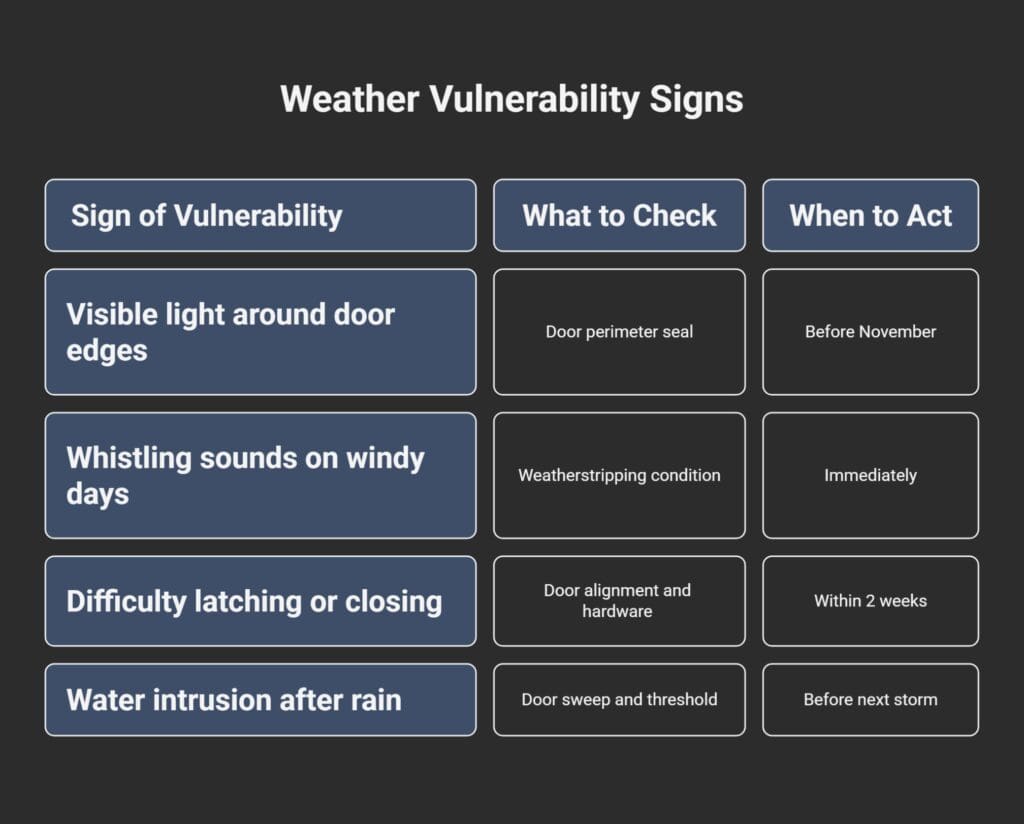
Test your door operation by opening and closing each exterior door multiple times. Difficulty latching, sticking, or scraping sounds often indicate the door has shifted or hardware has loosened, creating gaps that compromise weather protection. French doors and sliding glass doors require particular attention because these large openings see frequent use in the indoor-outdoor lifestyle common throughout the region.
How Can Retractable Screen Doors Protect Indoor Spaces?
Retractable screens serve a dual purpose during California winters. These screens allow you to keep doors open for fresh air circulation on mild winter days while blocking debris, leaves, and windblown rain from entering your home. Unlike traditional fixed screens, retractable systems disappear completely when not needed, giving you full flexibility to adjust your indoor-outdoor connection based on daily weather conditions. This adaptability proves especially valuable during Southern California’s variable winter weather, when a sunny 70-degree morning can turn into a rainy afternoon.
Retractable screen doors create a protective barrier that lets you maintain airflow without sacrificing security or weather protection. During Santa Ana wind events, which can reach speeds over 80 mph, you can retract the screens completely to avoid stress on the mesh and housing. When rain threatens but you want to enjoy natural ventilation, extending the screen lets you keep doors partially or fully open while preventing moisture from blowing inside.
What Window and Screen Maintenance Prevents Winter Issues?
When Should You Clean and Inspect Retractable Screens?
Late September through early October is the ideal window for retractable screen maintenance in Southern California. This timing puts you ahead of both rain season and Santa Ana wind season, ensuring your screens function properly when you need them most. Start by fully extending each retractable screen and examining the mesh for tears, holes, or areas where the mesh has separated from the frame. Even small damage can worsen quickly once stressed by wind or regular use.
Clean the mesh using a soft brush or microfiber cloth with mild soap and water, working gently to avoid stretching or damaging the material. Pay special attention to the screen tracks and housing, where dust, pollen, and debris accumulate over time. Use a vacuum with a brush attachment to remove loose debris from tracks, then wipe them clean with a damp cloth. For motorized retractable screens, test the motor function and battery backup if applicable. This simple seasonal maintenance routine extends screen life significantly while ensuring reliable operation when weather conditions change suddenly.
How Do You Protect Window Screens from Santa Ana Winds?
Santa Ana winds create unique challenges for screen systems throughout the region. These powerful, dry winds can gust well above 40 mph, putting significant stress on extended screens and potentially damaging mesh or hardware. In November 2024, wind warnings were issued for inland areas with gusts reaching 60 mph. The best protection is simple: retract your retractable screens when Santa Ana wind warnings are issued for your area. This takes the mechanical stress off the system entirely and protects your investment from wind damage.
For windows and doors where you regularly use retractable screens, develop the habit of checking wind forecasts during fall and winter months. Coastal communities typically experience less intense Santa Ana winds than inland valleys, but all areas of the region see periodic strong wind events. If you’re away from home when winds pick up, modern motorized retractable screen systems can often be controlled remotely, allowing you to retract screens for protection even when you’re not physically present.
How Can You Maintain Comfortable Airflow in Winter Months?
What Ventilation Strategies Work Best for Mild Winters?
Southern California’s mild winters allow for natural ventilation strategies that reduce heating costs while maintaining indoor air quality. Unlike cold-climate homes that stay sealed tight for months, homes here can take advantage of temperate days to flush indoor air and bring in fresh outdoor air. The key is timing: open windows and doors during the warmest parts of sunny winter days, typically between 11 AM and 3 PM, when outdoor temperatures often reach the 60s or low 70s even in December and January.
Create cross-ventilation by opening windows or doors on opposite sides of your home, allowing air to flow through naturally. Retractable screens make this strategy practical by letting you open doors wide for maximum airflow while maintaining insect protection and security. This approach is particularly effective in homes with open floor plans common in modern Southern California architecture. Close up the home before evening when temperatures drop, trapping the warmed air inside. This natural ventilation cycle improves indoor air quality, reduces reliance on mechanical heating, and helps maintain the connection between indoor and outdoor spaces that defines Southern California living.
Can You Still Use Retractable Screens in Cooler Weather?
Yes, retractable screens remain functional and beneficial throughout winter in Southern California. The temperate climate means many winter days still reach comfortable temperatures perfect for opening doors and windows. Retractable screens allow you to take advantage of these pleasant days without worrying about insects, debris, or sudden wind gusts. The screens create a comfortable middle ground between fully closed (which can make your home feel stuffy) and fully open (which may let in too much cool air).
Morning use proves especially practical during winter months. Many residents enjoy morning coffee on their patios or opening bedroom doors to fresh morning air, even in January and February. Retractable screens let you ease into the day with gentle natural ventilation while maintaining privacy and pest protection. As the sun sets and temperatures drop in the evening, simply retract the screens and close doors to retain indoor warmth. This flexibility supports year-round enjoyment of your outdoor spaces and helps maintain excellent indoor air quality without constant dependence on HVAC systems.
What Outdoor Living Space Prep Extends Usability Year-Round?
How Do You Winterize Patios Without Losing Functionality?
Winterizing outdoor spaces in Southern California means preparing for rain and occasional cool temperatures without completely closing everything down. Start by evaluating your patio furniture and deciding what stays out and what needs covered storage. Teak and all-weather wicker can typically handle winter weather with occasional cleaning, while fabric cushions benefit from weather-resistant storage or waterproof covers. Inspect your patio cover or pergola for any needed repairs, paying special attention to areas where water might pool or leak onto the space below.
Consider adding outdoor heaters or fire features that extend comfortable outdoor time throughout winter evenings. Many homeowners find that a quality patio heater or fire pit makes outdoor dining and entertaining comfortable even on 50-degree winter nights. Combine heating elements with retractable screens on the perimeter of covered patios to create a semi-enclosed, protected space that blocks wind while maintaining views and access. This approach preserves the open, airy feel of outdoor living while adding comfort during cooler months. You’re not sealing the space away for winter; you’re adapting it to seasonal conditions while keeping it fully usable.
What Screen Solutions Keep Outdoor Spaces Comfortable in Winter?
Retractable screens excel at creating flexible, weather-adapted outdoor spaces perfect for Southern California’s variable winter conditions. Installing retractable screens on the open sides of covered patios, lanais, or outdoor rooms gives you instant wind and rain protection without permanent enclosure. On calm, sunny winter days, retract the screens completely for full openness and maximum sun exposure. When weather turns breezy or rain threatens, extend the screens to create a protected envelope that still allows views and natural light.
Motorized retractable screen systems add extra convenience for larger openings or multiple screen locations. With the touch of a button or tap of a smartphone app, you can adjust your outdoor space protection in seconds as weather conditions change throughout the day. This proves especially valuable for homes with garage door openings converted to outdoor living areas, where large screen spans create comfortable, protected spaces perfect for winter use.
Maintenance Checklist Summary
Here’s your complete pre-winter maintenance checklist to prepare your home for the season:
October (Early Preparation)
- Inspect all outdoor living spaces for damage
- Test drainage patterns during or after rain
- Clean and inspect retractable screens
- Check door and window weatherstripping
- Examine patio furniture and cushions
November (Pre-Rain Season)
- Clear gutters and downspouts
- Seal any gaps around doors and windows
- Store or cover sensitive outdoor items
- Test retractable screen operation
- Verify proper water flow away from foundation
Ongoing (Throughout Winter)
- Monitor Santa Ana wind forecasts
- Retract screens during high wind warnings
- Take advantage of mild days for ventilation
- Address any drainage issues immediately
- Maintain flexible use of outdoor spaces
Ready to Enhance Your Home’s Year-Round Comfort?
Retractable screens offer flexible protection that adapts to Southern California’s unique climate. From rain season preparation to Santa Ana wind events, quality screens keep your indoor-outdoor lifestyle comfortable all year long.
Visit our website to explore your retractable screen options and find the perfect solution for your home.
FAQ
How early should I start winter preparation for my home? Start your preparation checklist in late September or early October. This timing gives you 4-6 weeks before rain season typically begins in November, allowing plenty of time to address any maintenance needs you discover during inspection.
What’s the most important winter maintenance task for homes in this region? Checking and improving drainage around your property is the single most important winter maintenance task. Poor drainage leads to foundation problems, moisture intrusion, and damage to outdoor living spaces. Walk your property during rain to identify problem areas, and address drainage issues before heavy winter storms arrive.
How often should I inspect retractable screens on my patio doors? Inspect your retractable screens twice per year: once in early fall before rain season, and once in spring after winter weather passes. Clean the mesh and tracks, check for damage, and test the operation during each inspection. This simple maintenance routine catches small issues before they become larger problems.
Can Santa Ana winds damage my retractable screen doors? Santa Ana winds can stress extended retractable screens if gusts are strong enough. The best protection is retracting your screens when wind warnings are issued. Modern retractable screens are engineered to handle normal wind conditions, but retracting during extreme wind events prevents unnecessary wear and potential damage.
Do I need to winterize my patio if I live in a coastal area? Yes, coastal areas still benefit from winter preparation even though temperatures stay mild. Salt air accelerates wear on hardware and finishes, making regular inspection and maintenance even more important. Check seals, clean screens, and protect furniture from moisture to extend the life of your outdoor living investments.
How much does professional retractable screen maintenance cost? Professional retractable screen maintenance typically costs between $100-$200 per screen depending on the size and whether it’s manual or motorized. Many homeowners choose to perform basic cleaning and inspection themselves and call professionals only when they identify specific issues needing expert attention.
Are retractable screens worth having for just a few winter months? Absolutely. Retractable screens provide value year-round, not just in winter. They protect against summer insects, block debris during Santa Ana winds, provide UV protection, and allow flexible indoor-outdoor living throughout all seasons. Winter use is just one benefit of a system that enhances comfort and functionality 365 days per year.
When should I call a professional for retractable screen inspection? Call a professional if you notice: difficulty extending or retracting the screen, visible damage to mesh or housing, unusual sounds during operation, or if your motorized system stops responding to controls. Window and door contractors can diagnose and repair issues before they worsen. Otherwise, most homeowners can handle basic seasonal inspection and cleaning independently.
What winter preparation do retractable garage door screens need? Retractable garage door screens need the same basic care as other retractable screens: clean the mesh and tracks, inspect for damage, and test operation. For motorized garage screen systems, verify that the motor functions properly and that any battery backup is charged. Clear the area around the screen housing of any stored items that could interfere with operation.
Can I install retractable screens myself or should I hire a professional? While some homeowners with strong DIY skills can install retractable screens, professional installation is recommended for best results and warranty protection. Proper measurement, mounting, and adjustment require specialized knowledge and tools. Professional installers ensure correct installation that delivers years of reliable performance.
Bottom Line
Winter in Southern California demands a different approach than cold-climate regions, but seasonal preparation remains essential for comfort and home protection. A systematic pre-winter maintenance checklist helps you identify and address needs before rain season arrives, protecting your investment while preserving the indoor-outdoor lifestyle that makes Southern California living special. Retractable screens play a valuable role in year-round home comfort, offering flexible protection that adapts to changing weather while maintaining the open, airy feeling that defines the region’s architectural character.
Ready to enhance your home’s year-round comfort with quality retractable screens? Professional installation ensures optimal performance and longevity for your investment.
Written by
Phantom Screens Team
Custom retractable screen solutions for homes across Southern California.
Related Articles

Next Generation Phantom Screens: What Actually Changed
What is new in the next generation of Phantom motorized screens: self-adjusting tension, no visible screws, better wind performance, and upgrade options for existing Phantom screen owners.

Motorized Screens With Luxury Vinyl for Southern California
What luxury vinyl motorized screens do, how they differ from mesh, and when Southern California homeowners with covered outdoor spaces need them for wind, cold, and year-round climate control.

Retractable Window Screens for Southern California Homes
Why retractable window screens are the most overlooked home upgrade in Southern California, covering window type compatibility, the kitchen use case, view preservation, and wood window options.
Interested in Retractable Screens?
Get a free quote for custom Phantom retractable screens — motorized, door, or window screens for your home.
Get a Free Quote