Retractable Screens Cost vs. Benefits: Are They Worth It in 2025?
TL;DR: Retractable screens cost more upfront than traditional fixed screens, but in 2025, they provide significantly greater long-term value for Southern California homeowners. They offer superior durability, UV protection, ventilation, energy savings during SoCal's hot summers, and a cleaner indoor

TL;DR:
Retractable screens cost more upfront than traditional fixed screens, but in 2025, they provide significantly greater long-term value for Southern California homeowners. They offer superior durability, UV protection, ventilation, energy savings during SoCal’s hot summers, and a cleaner indoor-outdoor look that complements high-value homes. When you factor in lifespan, functionality, curb appeal, and the rising demand for outdoor living upgrades across Orange County, Los Angeles, and San Diego, retractable screens deliver a much better return on investment than cheaper, frequently replaced fixed screens.
What Goes Into the Cost of Retractable Screens in 2025? (SoCal Pricing Explained)
Understanding retractable screen pricing requires looking beyond the sticker price to see what drives costs in Southern California’s unique market. In 2025, several factors influence what homeowners pay for quality retractable screen systems.
Manual retractable screens for standard door openings start around $564 for basic configurations (openings less than 84 inches tall and 40 inches wide). As you move to larger or custom sizes (up to 97 inches tall and 50 inches wide), prices typically range from $800 to $1,500. These manual systems require a simple pull mechanism to deploy and retract the screen.
Motorized retractable screens represent a premium option, with installed prices ranging from $3,000 to $6,000 or more depending on size and features. These systems can span up to 40 feet wide, making them ideal for large patio openings, California rooms, and commercial applications. The motorization adds convenience and allows for remote control operation, perfect for hard-to-reach locations or elderly homeowners.
Several Southern California-specific factors affect pricing. Labor costs in Los Angeles and Orange County are higher than national averages, reflecting the region’s cost of living and demand for skilled installers. Coastal areas like San Diego, Huntington Beach, and Newport Beach require corrosion-resistant materials that withstand salt air, which increases material costs but dramatically extends product lifespan.
The types of doors common in Southern California homes also influence pricing. Wide sliding glass doors, French door pairs, and bi-fold patio door systems require larger screens and more complex installation than standard single doors. Many SoCal homes feature these expansive openings designed to blur indoor-outdoor boundaries, which means larger, more expensive screen systems.
Cost Breakdown: What You’re Actually Paying For
When you invest in retractable screens, you’re purchasing a complete system engineered for long-term performance. Understanding the component costs helps justify the investment.
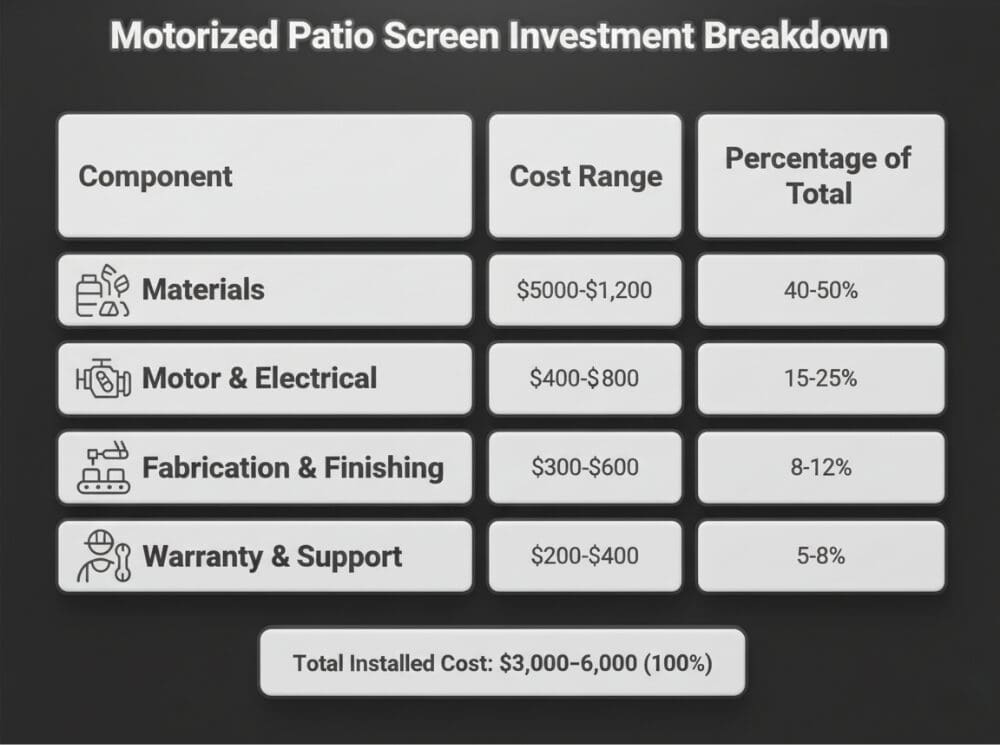
Materials Quality: The housing is constructed from extruded aluminum, powder-coated or anodized for weather resistance. Premium mesh options include fiberglass, polyester, or solar shade fabric, with costs adding $2-$3 per square foot for upgraded materials. UV-resistant components ensure colors don’t fade and plastics don’t become brittle in California’s intense sunshine. Hardware includes stainless steel fasteners and corrosion-resistant tracks, critical for coastal installations. For motorized systems, weather-sealed motors and battery backup systems add to materials costs.
Professional Installation Value: Expert installation typically accounts for $200-$500 of the total cost, but this investment is crucial. Professional installers provide precise measurement (errors can render screens inoperable), perfect track alignment for smooth operation, electrical work for motorized systems (requiring licensed electricians in California), and code compliance ensuring permits are handled correctly. Most importantly, professional installation comes with warranty protection that DIY installation voids.
Warranty and Support: Quality retractable screen manufacturers offer limited lifetime warranties on materials and workmanship, typically covering frame components, housing, and mechanical parts for 15-20 years. Mesh warranties usually run 5-10 years depending on material grade. This warranty coverage has real value, potentially saving thousands in repair or replacement costs over the product’s lifetime. Professional installation companies also provide ongoing support, troubleshooting, and service calls included in your initial investment.
Custom Fabrication: Unlike off-the-shelf fixed screens, retractable screens are custom-fabricated to your exact opening dimensions. This customization includes color-matching from typically 10 signature colors to blend with your home’s existing trim, mesh type selection (insect screen, solar shade, or combination), and special configurations for unusual openings or architectural details. This made-to-order approach ensures perfect fit and optimal performance but requires skilled fabrication that adds to costs.
The total investment breaks down approximately as follows for a typical motorized patio screen:
Understanding the Benefits: Why SoCal Homeowners Prefer Retractable Screens
Southern California’s lifestyle and climate create unique advantages for retractable screens that homeowners in other regions might not fully appreciate. These benefits go beyond simple insect protection to enhance daily living in meaningful ways.
Natural Ventilation for Hot Inland Summers: Residents of the Inland Empire, San Fernando Valley, and other inland Southern California communities experience intense summer heat. Retractable screens enable a natural cooling strategy by allowing homeowners to open multiple doors and windows simultaneously, creating cross-breezes that cool homes without air conditioning. You can safely leave doors open during cooler morning and evening hours, dramatically reducing cooling costs during peak rate periods.
UV and Glare Control for Sunny Afternoons: Orange County and San Diego enjoy abundant sunshine, which is wonderful until it creates glare on television screens or fades furniture and flooring. Retractable screens with solar mesh can block 50-90% of UV rays while still allowing views and airflow. This protection is particularly valuable for west-facing patios that receive intense afternoon sun, reducing heat gain while preserving outdoor visibility.
Maintaining Views: Southern California real estate often commands premium prices for views of oceans, mountains, canyons, or city lights. Fixed screens permanently obstruct these valuable vistas. Retractable screens preserve your investment by disappearing completely when you want unobstructed views, then providing protection when needed without compromising what you paid extra to see.
Aesthetic Integration: Modern Southern California architecture emphasizes clean lines, minimal visual clutter, and seamless indoor-outdoor flow. Spanish Revival homes feature elegant arches and decorative elements that fixed screens can obscure. Contemporary designs use floor-to-ceiling glass to create light-filled spaces that fixed screens darken. Retractable screens complement these architectural styles by staying hidden until needed, maintaining your home’s design integrity.
Flexibility for Outdoor Living: Southern California’s year-round outdoor living culture means patios, decks, and balconies function as extensions of interior spaces. Homeowners host backyard barbecues, outdoor dinners, and patio gatherings throughout the year. Retractable screens provide flexibility to fully open spaces when entertaining, creating that resort-like flow guests love, then close off areas when insects become active at dusk or when you want privacy from neighbors.
Compatibility with Modern Door Systems: Bi-fold door systems, multi-panel sliders, and disappearing corner doors are increasingly popular in Southern California remodels. These sophisticated systems create massive openings that standard fixed screens can’t accommodate. Retractable screens are specifically designed to work with these modern door configurations, with motorized options spanning 40 feet to cover even the largest openings.
Retractable Screens Cost vs. Benefits: The 2025 ROI for Southern California Homes
Evaluating whether retractable screens justify their cost requires examining total ownership costs and benefits over time, not just comparing initial purchase prices. In 2025, several factors make the return on investment particularly compelling for Southern California homeowners.
Lifespan Comparison: Quality retractable screens last 15-20 years or more with minimal maintenance. The protective housing shields the mesh from sun, wind, and debris when retracted, dramatically extending material life. Fixed screens, constantly exposed to elements, typically require replacement every 3-7 years in Southern California’s harsh climate. Over a 20-year period, a homeowner might replace fixed screens 3-4 times at $100-$300 per screen, accumulating costs that approach or exceed retractable screen prices while never achieving the same functionality or aesthetic benefits.
Reduced Repair Frequency: Fixed screens tear from pet claws, sag from constant tension, and develop holes from impact. Homeowners spend time and money on repeated repairs or simply live with damaged screens that look unsightly and function poorly. Retractable screens, protected when not in use and built with stronger materials, rarely require repairs beyond occasional track cleaning or minor adjustments.
Increased Home Desirability: In Southern California’s competitive real estate market, homes with premium features sell faster and command higher prices. According to research published in the Journal of Real Estate Finance and Economics in August 2025, good curb appeal can boost home value by an average of 7%, with increases of 10-11% observed in slower markets. Retractable screens contribute to curb appeal by maintaining clean exterior lines and signaling to buyers that the home has been thoughtfully upgraded with quality materials.
Integration with Outdoor Living Trends: The outdoor living boom continues strong into 2025. A 2025 Houzz study found that 63% of homeowners prioritize outdoor living upgrades, with 56% of design experts citing cohesive indoor-outdoor design as a top trend. Retractable screens align perfectly with this trend, enhancing outdoor spaces without the visual drawbacks of fixed screens. As outdoor living areas represent 20% of current renovation spending, features that improve these spaces add measurable value.
Reduced Heat Buildup and AC Costs: California electricity rates have skyrocketed, with the California Public Utilities Commission’s Public Advocates Office reporting a 104% increase between January 2015 and April 2025. The average California household now pays $720 more annually for electricity compared to 2023, according to The Utility Reform Network (TURN). Retractable screens enable natural ventilation strategies that reduce air conditioning runtime. Research published in Frontiers in Built Environment in January 2025 demonstrated that natural ventilation can reduce cooling energy consumption by 10-40% in moderate climates like Southern California. Even conservative energy savings of 10-15% translate to $70-$100 annually, helping offset the initial screen investment over time.
Here’s a simplified ROI comparison over 20 years:
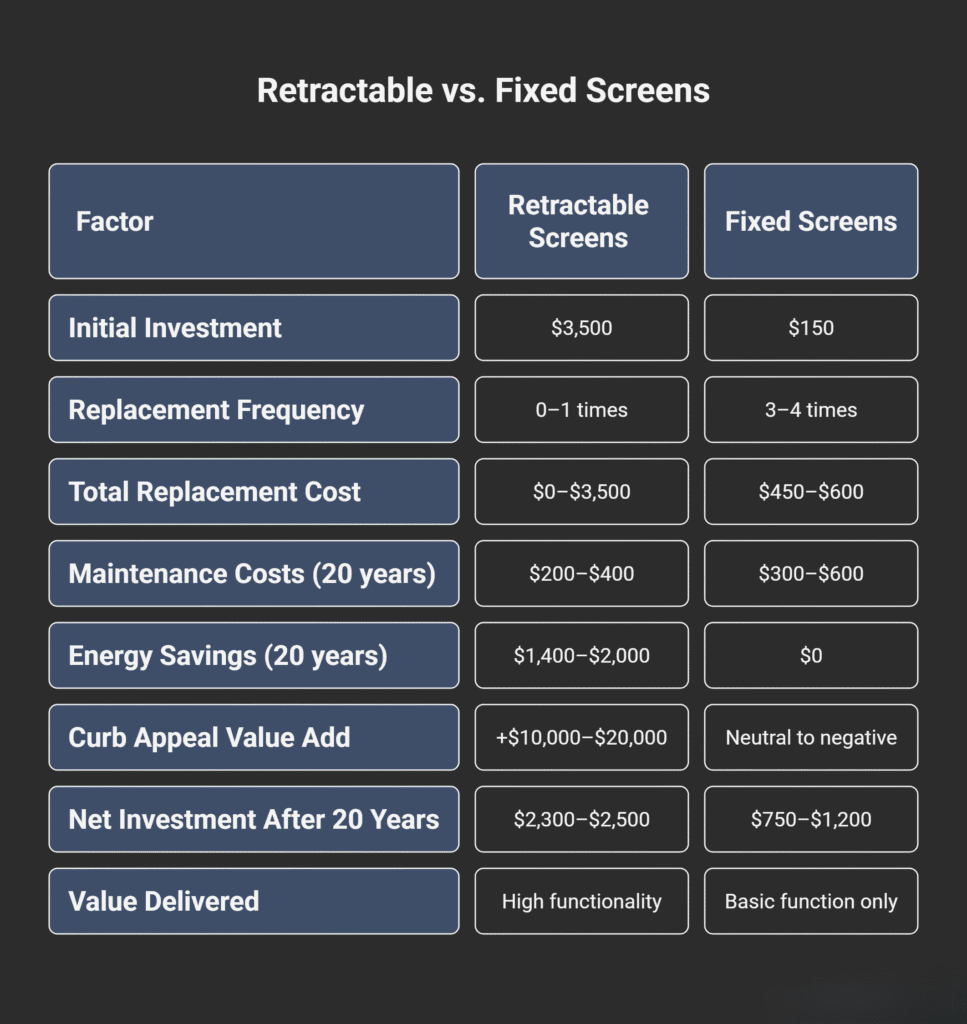
When you factor in the enhanced lifestyle, energy savings, and home value benefits, retractable screens deliver substantially better return on investment despite higher initial costs.
Energy Efficiency: How Retractable Screens Help You Save in SoCal Heat
Energy costs have become a major concern for California homeowners in 2025, making any upgrade that reduces electricity consumption increasingly valuable. Retractable screens contribute to energy efficiency in ways that surprise many homeowners.
Natural Ventilation During Warm Evenings: Southern California benefits from significant temperature drops in the evening, especially in inland and mountain communities. Coastal areas enjoy ocean breezes that can naturally cool homes if you can safely open doors and windows. Retractable screens enable a powerful cooling strategy: open your home completely during cooler hours (typically 6 PM to 10 AM), allowing natural ventilation to flush out hot air and cool your interior spaces. The screens keep insects out while maximizing airflow. This strategy can eliminate air conditioning use during mild weather and significantly reduce runtime during hot periods.
A December 2024 study from Drexel University confirmed that cross ventilation is “the most efficient strategy” for achieving energy savings in residential buildings, with homes able to maintain comfortable conditions for up to 90% of occupancy time using natural ventilation in appropriate climates.
Prevention of Heat Gain: Retractable screens with solar mesh provide an additional energy benefit by blocking 50-90% of solar heat before it reaches your windows and doors. This is particularly valuable for west-facing patios and large glass doors that receive intense afternoon sun. By reducing solar heat gain, screens lower the cooling load on your air conditioning system, allowing it to cycle less frequently and consume less electricity.
Rising California Electricity Rates Make Savings More Valuable: The U.S. Energy Information Administration reports that California residential electricity rates have reached among the highest in the continental United States. Southern California Edison (SCE) rates increased from 31.2 cents per kilowatt-hour to 35.3 cents per kilowatt-hour in October 2025 alone. Pacific Gas & Electric (PG&E) implemented six rate increases during 2024, with projections showing an additional 10.5% average increase across California utilities in 2025.
These escalating costs make even modest energy savings financially meaningful. If retractable screens enable you to reduce air conditioning use by just 10-15% during summer months (a conservative estimate based on published research), a typical Southern California household using 750 kWh monthly during peak summer could save 75-112 kWh per month. At current SCE rates of approximately 35 cents per kWh, this represents monthly savings of $26-$39, or $78-$117 during a typical three-month peak summer period.
Real-World Example: Consider a homeowner in Riverside with a west-facing patio and large sliding glass doors. Prior to installing retractable screens, they kept doors closed during the day to prevent insects and heat buildup, relying entirely on air conditioning. After installation, they implemented a new routine: deploy solar shade screens during peak afternoon sun (2 PM to 6 PM) to block heat while maintaining views and airflow. In the evening, retract the solar screens and open doors completely to flush hot air with cooler outside air. This strategy reduced their summer air conditioning runtime by an estimated 20%, saving approximately $150-$200 during the June-August period. Over the screen’s 20-year lifespan, these savings accumulate to $3,000-$4,000, effectively paying for the screen installation while providing all the lifestyle and aesthetic benefits.
Durability and Maintenance: Retractable vs. Fixed Screens in a SoCal Climate
Southern California’s climate presents specific durability challenges that dramatically affect screen longevity and maintenance requirements. Understanding these factors is crucial for evaluating true long-term costs.
Coastal vs. Inland Durability Needs
Coastal environments (from San Diego north through Orange County to Malibu) expose screens to salt-laden ocean air that accelerates corrosion on metal components and degrades mesh materials. Fixed screens in these locations show visible deterioration within 3-4 years: aluminum frames develop white oxidation, fiberglass mesh becomes brittle and tears easily, and metal fasteners rust. The constant exposure provides no respite from these corrosive elements.
Retractable screens address coastal challenges through material selection and protective design. The aluminum housings receive powder-coating or anodization specifically rated for coastal exposure. When screens retract into their housings, the mesh is completely protected from salt air. Even the deployment mechanism uses stainless steel or coated components that resist corrosion. Homeowners in Newport Beach, Huntington Beach, or San Clemente report retractable screens maintaining like-new appearance and function for 15+ years, while neighbors replace fixed screens every 3-4 years.
Inland communities face different but equally demanding conditions. The Inland Empire, San Fernando Valley, and desert communities experience extreme temperature swings, intense direct sunlight, and periodic Santa Ana winds. Fixed screens in these areas fade rapidly from UV exposure, become brittle from heat cycling, and develop tears from wind stress. The mesh material literally disintegrates over time, requiring complete replacement.
Protection Through Design
The fundamental advantage of retractable screens is simple but powerful: when you don’t need them, they’re protected. This protection extends lifespan dramatically because screens avoid constant environmental assault. Compare this to fixed screens that endure 24/7/365 exposure to whatever nature delivers.
Santa Ana winds present a specific challenge where retractable screens shine. These powerful, hot, dry winds can gust to 40-60 mph, putting tremendous stress on fixed screens. Tears, frame damage, and complete screen failure are common during major Santa Ana events. Retractable screens can be retracted during high wind warnings (or automatically retract if motorized with wind sensors), eliminating damage risk entirely. Once winds subside, you simply redeploy the screens.
Maintenance Requirements Over Time
Retractable screen maintenance is minimal and infrequent. Recommended care includes cleaning the mesh 1-2 times annually with mild soap and water, vacuuming tracks to remove accumulated dust and debris (10 minutes, twice yearly), and lubricating moving parts on manual screens (annually). Motorized screens may require battery replacement every 3-5 years if battery-operated. Most homeowners report spending less than 2 hours annually on retractable screen maintenance.
Fixed screen maintenance demands significantly more effort. The screens require cleaning every 2-3 months in dusty areas or near the coast to maintain proper airflow and appearance. This involves removing each screen, washing both sides, allowing to dry, and reinstalling. For a home with 10 windows and 2 doors, this process takes 2-3 hours per cleaning session, totaling 8-12 hours annually.
Beyond cleaning, fixed screens require frequent repairs: patching small tears before they expand, re-tensioning sagging mesh, replacing damaged spline (the rubber cord holding mesh in the frame), and addressing pet damage. These repairs demand time and materials, with many homeowners eventually replacing screens rather than continually repairing them.
Over 20 years, the time and cost differential is substantial:
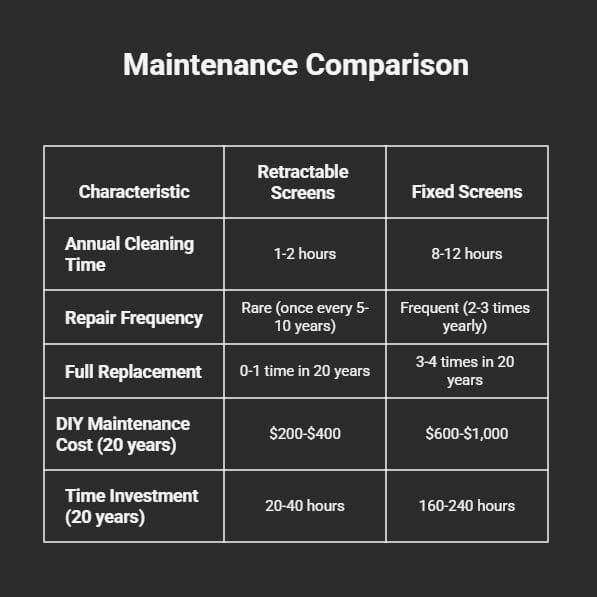
The time savings alone represent significant value for busy homeowners who would rather enjoy their outdoor spaces than maintain screens.
Aesthetics and Curb Appeal: Why Retractable Screens Blend into SoCal Home Design
Southern California’s diverse architectural styles, from mid-century modern to Spanish Revival to contemporary coastal, share a common emphasis on clean lines and visual harmony. How screens affect your home’s appearance matters both for daily enjoyment and long-term property value.
The Invisibility Factor: The most striking aesthetic advantage of retractable screens is their near-invisibility when not in use. The slim aluminum housing (typically 2-3 inches square) mounts above doorways or beside window frames, blending seamlessly with trim when color-matched. From 10 feet away, most people don’t notice them at all. This invisibility preserves your home’s architectural character and maintains the clean exterior lines that define premium Southern California properties.
Luxury homes in Newport Beach, Calabasas, or La Jolla invest significantly in architectural details, custom millwork, and carefully chosen color palettes. Fixed screens interrupt these design elements, creating a utilitarian appearance that conflicts with sophisticated aesthetics. Retractable screens respect and preserve these investments.
Alignment with Modern Minimalism: The minimalist aesthetic dominates contemporary Southern California design. Clean surfaces, uncluttered sight lines, and purposeful simplicity define this style. Fixed screens add visual noise—a grid of mesh creating texture and obstruction where designers intended smooth transitions and clear views. Retractable screens align perfectly with minimalist principles: function without unnecessary visual presence, technology that disappears until needed, and thoughtful design that enhances rather than compromises architectural intent.
Perfect for Large Openings: Southern California indoor-outdoor living often centers on dramatic openings—12-foot sliding doors, bi-fold systems that open entire walls, or floor-to-ceiling glass that erases boundaries between inside and out. These architectural features represent significant investments, often $10,000-$30,000 or more for premium systems. Fixed screens would partially negate this investment by creating permanent visual barriers. Retractable screens, especially motorized systems spanning up to 40 feet, maintain the drama and functionality of these expansive openings while providing protection when needed.
California Room Compatibility: California rooms (covered outdoor living spaces that function as additional rooms) have become highly desirable features in Southern California homes. These spaces require screening to be usable during mosquito-active hours but look best when screens can disappear during the day or when entertaining. Retractable screens transform California rooms into truly flexible spaces that adapt to different uses and times of day.
Resale Value Protection: When buyers tour homes, they notice curb appeal and design cohesion within seconds. A home with dated or damaged fixed screens signals deferred maintenance and lower quality to prospective buyers. The same home with retractable screens (or no visible screens at all when retracted) presents as well-maintained, updated, and premium. According to the National Association of Realtors, 74% of realtors recommend exterior upgrades to improve sellability, with curb appeal consistently ranking as one of the most important factors in buyer perception.
In Southern California’s competitive real estate market, where homes in desirable areas see multiple offers and buyers have high expectations, these details matter. Retractable screens represent the kind of thoughtful, quality upgrade that appeals to discerning buyers and helps justify premium asking prices.
Real SoCal Examples: How Homeowners Justified the Cost
Understanding how real Southern California homeowners have evaluated and benefited from retractable screens helps illustrate the decision-making process and outcomes.
San Clemente Ocean View Home: A couple living two blocks from the beach in San Clemente faced a common dilemma. Their home featured spectacular ocean views through large sliding glass doors, but fixed screens made these views hazy and diminished. Removing screens entirely meant dealing with flies and mosquitoes whenever doors were open. After researching options, they invested $5,200 in motorized retractable screens for their main living area doors.
Their experience highlights several benefits. The screens completely disappear with a button press, restoring their unobstructed ocean views whenever they want. During morning coffee or evening dinners, they deploy screens to enjoy fresh ocean breezes without insects. The solar mesh option they selected blocks afternoon glare while maintaining visibility. Three years later, they report the screens look and function perfectly, with salt air showing no effect on the protected system. They’ve calculated approximate energy savings of $100 annually from increased natural ventilation, and they value the lifestyle improvement even more than the financial return.
Pasadena Historic Craftsman: A homeowner with a 1912 Craftsman bungalow in Pasadena wanted to screen their front porch and French doors without compromising the home’s historic character. Fixed screens would have obscured the detailed woodwork and created an anachronistic appearance inappropriate for the architecture.
They selected manual retractable screens in a custom color matching their original wood trim. The screens mount inside the door frames, remaining invisible unless deployed. During the day, guests see the home as it was designed in 1912. In the evening, the family deploys screens to sit on the porch with doors open, enjoying cross-ventilation through the home without mosquitoes. The screens have performed flawlessly for five years, and the homeowner notes that visitors often don’t realize screens are installed until they see them deployed. The investment of $1,800 (three screens) preserved the home’s historic integrity while adding modern functionality.
Riverside Family Reducing Cooling Bills: A family in Riverside with a west-facing patio and large sliding doors struggled with intense afternoon heat and high summer electricity bills approaching $400 monthly. Their home’s design featured beautiful indoor-outdoor flow, but they kept doors closed during hot weather to manage cooling costs, negating the design benefit.
After installing motorized retractable screens with solar shade mesh ($4,200 for two large openings), they implemented a new routine. During peak afternoon heat (2 PM to 6 PM), they deploy screens to block solar heat while maintaining visibility and some airflow. In the evening as temperatures drop, they retract screens and open doors completely, flushing hot interior air with cooler outside air. This strategy reduced their summer cooling bills by approximately 18%, saving $70-$80 monthly during June through September.
Beyond energy savings, the family now uses their patio extensively during times they previously avoided due to heat or insects. They’ve hosted outdoor dinners, movie nights, and weekend gatherings that weren’t feasible before. The screens paid for themselves through energy savings in about 5-6 years, but the family values the enhanced livability of their home even more than the financial return. You can learn more about transforming outdoor spaces for dining and entertaining at Phantom Screens’ blog.
Final Verdict: Are Retractable Screens Worth the Money in 2025?
After examining costs, benefits, durability, energy efficiency, and real-world experiences, the answer for most Southern California homeowners is clearly yes. Retractable screens deliver substantially better value than fixed screens despite higher initial costs.
When Retractable Screens Make the Most Sense:
You own your home and plan to stay 5+ years, allowing time to realize energy savings and lifestyle benefits. Your home features valuable views (ocean, mountain, canyon, city) that fixed screens would obstruct. You have large openings, modern door systems, or California rooms that benefit from flexible screening. You prioritize aesthetics and want screens that don’t compromise your home’s appearance. Energy costs concern you and you’re interested in natural cooling strategies. You live in a coastal area where salt air rapidly degrades fixed screens. Your home has premium finishes and you want upgrades that match the overall quality level.
The Math Works Out: Over a 20-year period, the total cost difference between retractable and fixed screens narrows considerably when you factor in replacement frequency, maintenance time, and energy savings. When you add the lifestyle benefits, aesthetic advantages, and home value protection, retractable screens deliver superior return on investment.
2025 Market Factors Strengthen the Case: Several trends in 2025 make retractable screens more valuable than ever. Rising electricity costs (up 104% since 2015) increase the value of natural ventilation strategies. The continuing outdoor living boom means features that enhance outdoor spaces add measurable home value. Labor and material costs have stabilized after pandemic disruptions, making now a good time to invest. HOA regulations increasingly favor retractable over fixed screens due to their discreet appearance.
Investment Rather Than Expense: The key to understanding retractable screen value is viewing them as an investment in your home and lifestyle rather than a maintenance expense. They solve problems (insects, heat, glare, obstructed views) while enhancing your daily living experience. They protect and potentially increase your home’s value while reducing ongoing maintenance burden. They provide energy savings that accumulate over decades while requiring minimal upkeep.
For Southern California homeowners who value their home’s aesthetics, want to maximize outdoor living potential, and appreciate quality products that deliver long-term performance, retractable screens are absolutely worth the investment in 2025.
Considering Retractable Screens for Your Southern California Home?
If you’re evaluating retractable screens for your home, professional guidance can help you understand which options work best for your specific situation. A consultation can address your unique needs regarding sizing options for your door configurations (standard, oversized, bi-fold, multi-panel), mesh type selection (standard insect, solar shade, or combination), motorized vs. manual operation based on screen size and accessibility, color matching to blend with your existing trim and architectural style, and HOA approval support if you live in a planned community.
Quality and installation expertise matter significantly with retractable screens. Professional-grade systems provide the durability, smooth operation, and long-term performance that justify the investment. Look for installers with extensive Southern California experience who understand regional climate challenges, local building codes, and architectural styles common to your area.
For homeowners in Orange County, Los Angeles, San Diego, and the Inland Empire, working with local installation companies ensures your screens are properly specified for your environment. Coastal installations require different materials and preparation than inland installations. Large openings demand precise engineering and installation. Local companies provide ongoing support, warranty service, and the ability to address any issues that arise.
The investment in retractable screens pays dividends for years through enhanced comfort, reduced maintenance, energy savings, and improved home aesthetics. Taking time to explore your options ensures you select the right system for your needs and budget.
Frequently Asked Questions
How much do retractable screens cost in Southern California in 2025?
Manual retractable screens for standard door openings start around $564-$1,500 installed, depending on size and configuration. Motorized retractable screens for large openings range from $3,000-$6,000 or more, with prices varying based on opening size (up to 40 feet wide), mesh type, motor quality, and installation complexity. Coastal installations may cost slightly more due to corrosion-resistant material requirements.
Are retractable screens durable enough for coastal homes in San Diego?
Yes, quality retractable screens are specifically engineered for coastal environments. The protective housing shields the mesh from salt air when retracted, dramatically extending lifespan compared to fixed screens. Aluminum housings receive powder-coating or anodization rated for coastal exposure, and hardware uses stainless steel or coated components. Homeowners in San Diego, Newport Beach, and other coastal areas report 15-20+ years of trouble-free performance.
Do retractable screens help reduce heat inside Los Angeles homes?
Yes, retractable screens contribute to cooling in two ways. First, they enable natural ventilation by allowing you to safely open doors and windows during cooler morning and evening hours, flushing hot air with cooler outside air. Second, solar shade mesh options block 50-90% of solar heat before it reaches windows and doors, reducing heat gain during peak afternoon sun. Research shows natural ventilation can reduce cooling energy consumption by 10-40% in moderate climates like Los Angeles.
How long do retractable screens typically last in SoCal weather?
Quality retractable screens last 15-20 years or more with proper maintenance in Southern California’s climate. The protective housing is the key factor. When retracted, screens are shielded from UV rays, wind, salt air, and debris that would otherwise cause degradation. Even when deployed, premium materials and engineering ensure long-term durability. Many manufacturers offer limited lifetime warranties on frame components.
What’s the difference in lifespan between fixed screens and retractable screens?
The difference is dramatic. Fixed screens in Southern California typically require replacement every 3-7 years due to constant exposure to sun, wind, salt air (coastal areas), and physical wear. Retractable screens last 15-20+ years because they’re protected when not in use. Over a 20-year period, you might replace fixed screens 3-4 times while retractable screens continue functioning like new.
Are motorized retractable screens worth the extra cost?
Motorized screens justify their premium price ($2,000-$3,000 more than manual) in several situations: very large openings (over 10 feet wide) where manual operation becomes difficult, hard-to-reach locations where accessing a manual pull would be inconvenient, elderly or mobility-impaired homeowners who benefit from push-button operation, and integration with smart home systems for automated operation. For standard door openings with easy access, manual screens work perfectly well at lower cost.
Do retractable screens block UV rays or reduce glare?
Standard insect mesh provides minimal UV blocking. However, solar shade mesh options block 50-90% of UV rays depending on the fabric grade selected. These specialized meshes significantly reduce glare while maintaining visibility and airflow, making them ideal for west-facing patios or areas with intense afternoon sun. You can select mesh density based on your specific needs for view vs. sun control.
Can retractable screens handle Santa Ana winds?
Yes, when used correctly. During high wind warnings, retractable screens should be retracted into their protective housing, eliminating any wind load or damage risk. Some motorized systems offer wind sensors that automatically retract screens when gusts exceed safe thresholds. This adaptability is a major advantage over fixed screens, which remain exposed and vulnerable during Santa Ana events, often suffering tears or complete failure.
Are retractable screens a good investment for older homes or historic properties?
Absolutely. Retractable screens are ideal for historic homes because they preserve original architectural details rather than obscuring them. The screens can be color-matched to historic trim colors and remain invisible when retracted, maintaining the home’s authentic appearance. Many historic homeowners appreciate that retractable screens add modern functionality without compromising period aesthetics. They’re completely reversible if ever needed for restoration purposes.
Written by
Phantom Screens Team
Custom retractable screen solutions for homes across Southern California.
Related Articles

Next Generation Phantom Screens: What Actually Changed
What is new in the next generation of Phantom motorized screens: self-adjusting tension, no visible screws, better wind performance, and upgrade options for existing Phantom screen owners.

Motorized Screens With Luxury Vinyl for Southern California
What luxury vinyl motorized screens do, how they differ from mesh, and when Southern California homeowners with covered outdoor spaces need them for wind, cold, and year-round climate control.

Retractable Window Screens for Southern California Homes
Why retractable window screens are the most overlooked home upgrade in Southern California, covering window type compatibility, the kitchen use case, view preservation, and wood window options.
Interested in Retractable Screens?
Get a free quote for custom Phantom retractable screens — motorized, door, or window screens for your home.
Get a Free Quote